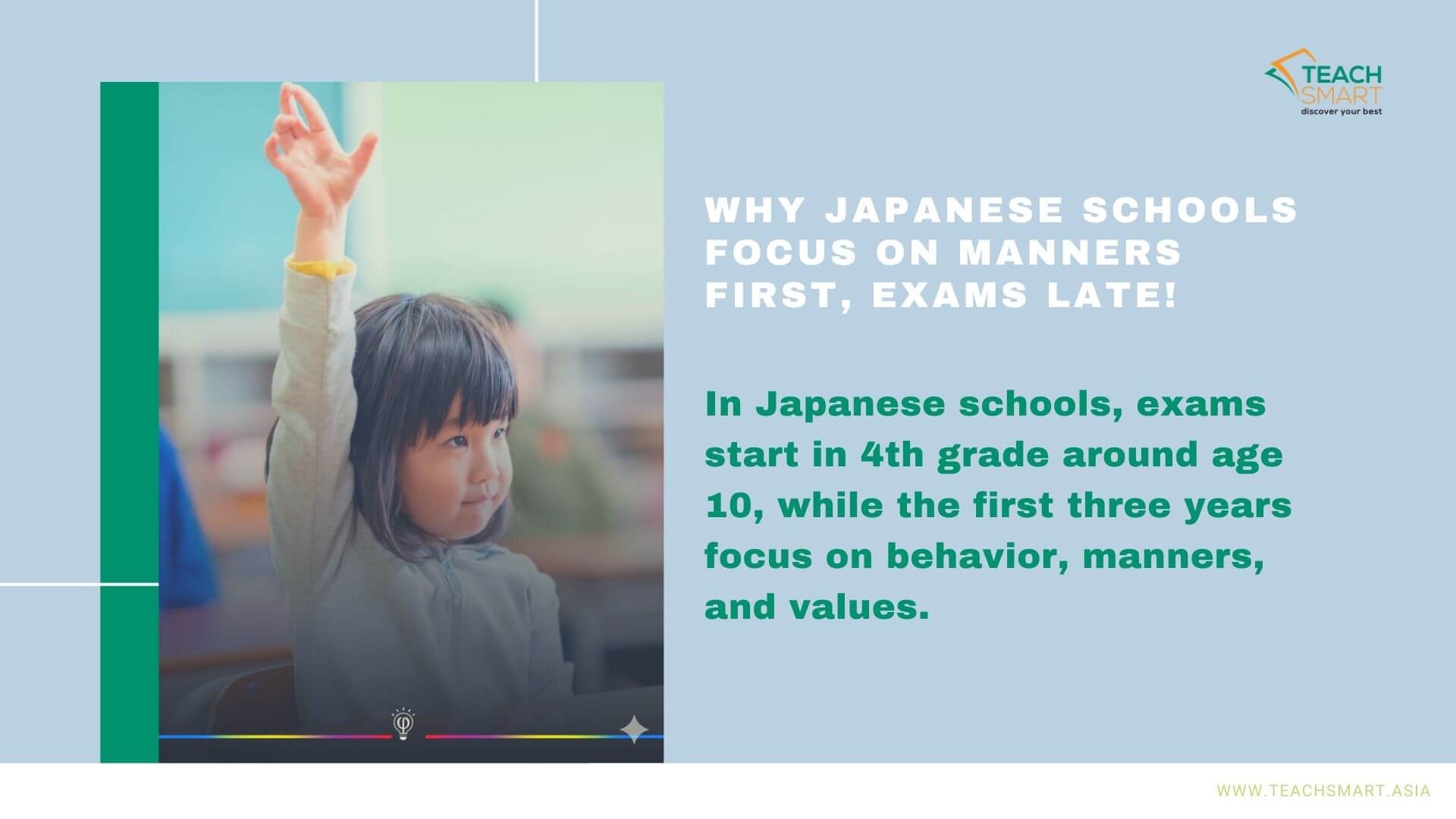
 Japanese schools focus on character, manners, and social values in the first three years, teaching respect and responsibility before academic exams.
Japanese Schools: Building Character Before Exams
When you think about school, you might picture lessons, homework, and endless tests. But Japanese schools take a very different approach in the first three years of elementary education. Instead of starting with heavy academics, these schools emphasize character development, manners, and social values—a philosophy that makes Japan’s education system stand out around the world.
From the very first day of Grade One, Japanese children are gently guided to learn respect, empathy, and responsibility. Teachers encourage students to greet each other politely, listen attentively, and help classmates in need. Rather than memorizing facts for exams, the focus is on learning how to be kind, cooperative, and mindful of others. This early emphasis on emotional intelligence creates a strong foundation for personal growth and community building.
One of the most inspiring traditions in Japanese schools is the daily cleaning routine. Instead of relying on janitors, students work together to sweep floors, wipe desks, and keep their classrooms spotless. This simple practice teaches discipline, teamwork, and pride in a shared environment. Children learn that taking care of their surroundings is everyone’s responsibility—a lesson that stays with them for life.
Academics are not ignored; they are simply introduced gradually. By Grade Four, when formal tests and evaluations begin, students are already equipped with habits of respect, self-control, and cooperation. Teachers believe this early character training makes children more motivated and better prepared to handle academic challenges.
The results are easy to see. Graduates of Japanese schools often display strong social skills, empathy, and a sense of duty to their communities. Parents and educators worldwide admire this holistic method, which proves that education is not only about what children know, but also about who they become.
For countries looking to reform their education systems, the message from Japanese schools is clear: nurture the heart first, and the mind will follow.
collected